Where It Matters Most
Why strengthening KGH's Emergency Department is critical
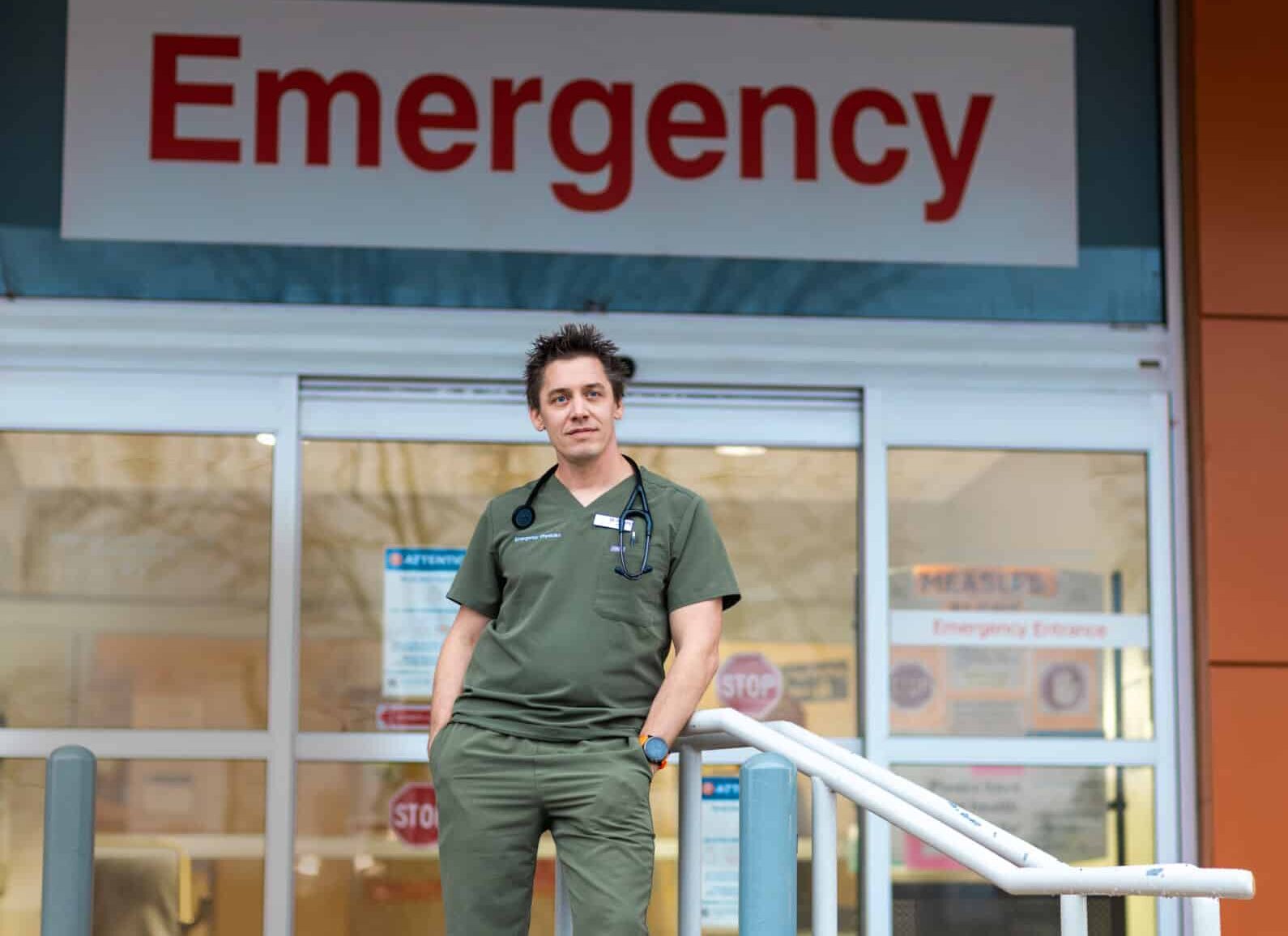
There’s an unspoken philosophy on our team: we care deeply, and we always show up. Since opening, our department has never missed a single shift, caring for up to 360 patients a day while maintaining the lowest ‘left without being seen’ rate in the province by far. I’m incredibly proud of our team, these improvements will help us do what we do best, even better.
Dr. Neil Long
This spring, as the final commitment in the KGH Foundation’s $40 million Closer to Home Than You Think campaign, we are aiming to raise $2.5 million to support the incredible teams in the KGH Emergency Department – a critical step in revitalizing and strengthening a department that all of us rely on in times of crisis.
It’s hard to believe it’s been almost ten years since we first met Marissa. A lot can happen in that time. Back then, she was a shy teenager from Penticton with a heart for adventure and animals. Today, she is a confident young woman – a vet tech, newlywed, world-traveller and enthusiastic dog mom.
It’s a future she almost didn’t have.
“It was just another normal day,” recalls Marissa. The 15-year-old and her new boyfriend had ventured out with some family and friends for an ATV ride on Apex Mountain. But things took a turn when a tree became lodged in the wheel well. It came up under the door of the ATV, impaling Marissa through her stomach, and out her back, pinning her body to the seat. When the response team was able to reach her in the remote location, they could not remove the log from her torso as it was too risky. They had to carefully saw it at the front and the back so they could move Marissa with the tree still intact within her body. They could then fly her suspended from a helicopter to a safe location where they loaded her into an air ambulance and rushed her to Kelowna General Hospital (KGH).
Across British Columbia, a handful of hospitals play a defining roles in their region. KGH is one of them. From trauma care to stroke response, to complex medical emergencies, KGH is a primary access point for life-saving intervention for patients and families across the Central Okanagan and the broader Southern Interior. As one of only two tertiary referral hospitals in the region—and its primary teaching hospital—KGH is a vital hub for acute and specialty medicine. At its core is the Emergency Department (ED), providing 24/7 assessment, stabilization, and life-saving treatment for people like Marissa facing sudden, serious illness or injury.
One of the KGH’s long-standing ED physicians and former Executive Medical Director for IH Central, Dr. Mike Ertel, happened to be on shift that fateful day when Marissa arrived.
“It’s a day I don’t think any of us who were involved will ever forget,” says Dr. Ertel. “We pulled back the blankets and… this was a 15-year-old girl with a tree through her abdomen. There was a moment of silence. You could’ve heard a pin drop. And then we just got to work.”
Thanks to the incredible care Marissa received that day, and in the days and weeks following, she is the thriving young woman she is today.
Marissa’s story is remarkable. However, on some level, many of us can relate. A trip to the Emergency Department is never planned and, as patients and families, these can be some of the scariest matters we will face. In those moments, nothing else matters other than knowing you have access to the best care possible.
They were there for me when I needed them, and now they need us. I would do anything to help the people and the hospital that made all of this possible for me.
Marissa

Today, KGH is experiencing record pressure on its ED as the region’s population grows and the demand for acute, unscheduled care continues to rise. KGH now manages some of the highest emergency volumes in British Columbia, ranking second only to Surrey Memorial. This means KGH sees more emergency patients than large urban hospitals such as Vancouver General and St. Paul’s. In the 2024/25 fiscal year, the ED recorded 101,089 emergency visits, up from 95,022 the previous year, a significant year-over-year increase.
This pressure reflects not only local growth but KGH’s regional role. Patients like Marissa arrive from communities across the Southern Interior, often transported by road or air ambulance for trauma, cardiac events, stroke, and other time-sensitive emergencies. Reduced access to family medicine and the closure of walk-in clinics have further increased reliance on emergency care.
Nearly three quarters (74.6%) of ED visits fall into the “emergent/urgent” category requiring timely attention and intervention. Despite rising demand, the KGH ED continues to perform exceptionally with both the lowest “Left Without Being Seen” (LWBS) percentage, and the second quickest “Time to Physician Initial Assessment” (TPIA) in the province for the last fiscal year.
The current ED, located in the Centennial building, opened in 2012. Fourteen years later, volume, acuity, and population growth have exceeded what the existing layout was designed to support. Triage, waiting spaces, diagnostic points, and patient registration are operating beyond capacity. These constraints affect flow, clinician efficiency, and the ability to compassionately manage high-volume surges.
“Every day, we care for patients facing some of the most frightening moments of their lives,” shares Dr. Long. “In a fast-paced environment that helps thousands of people each year, efficiency isn’t just helpful, it’s essential. These updates will help us work faster and more effectively in a place where seconds can change outcomes.”
The care Marissa received in the ED, care so many of our loved ones and friends have also relied on, not only saved her life. It gave her a future: the opportunity to work with animals, travel across the world, and marry Austin, the boy who was with her that day on the mountain.
Planned Upgrades
- Additional triage stations: Allowing patients to be assessed more quickly on arrival, reducing time to diagnosis and treatment and overall time in the department which will reduce congestion and improve flow.
- New patient registration area: Updated to streamline check-in and support safer, more efficient interactions for patients and staff.
- Redesigned waiting room: Refreshed layout and new furnishings will improve comfort, visibility, and patient monitoring.
- Culturally welcoming design: Inclusive design elements that incorporate different languages and a new mural will create a welcoming and respectful space for all patients who need to access the Emergency Department.