Giving Changes Brain Health

Building a healthier future, together.

“Supporting people and innovation leads to results. We have seen major advances in the scope and quality of neurological care at our site by attracting and supporting people who build & innovate. Support from the community allows us to go beyond what we need today, and drive care further.”


Dr. Daryl Wile, Neurologist (Clinical Lead)

When disease, disorder or injury affects the brain, the impact can reach nearly every part of a person’s life, from movement and memory to communication, independence, and overall quality of life. 

As our population grows and ages, so does the need for comprehensive, specialized neurological care. Through Closer to Home Than You Think, our community has helped strengthen brain health services at KGH, supporting the expertise, research, innovation, and technology needed to advance care across our region. 

0

people affected by neurological conditions in the Interior Health region (2020/21)

0 %

projected increase in incidence rates for dementia and Parkinson disease by 2031

1 in 0

Canadians are not represented in research trials

1 in 0

People worldwide are affected by brain disease

FEATURES
EVOLVE Awards in Brain Health
Encouraging and Valuing Ongoing Leadership, Vision and Engagement

The EVOLVE Awards invest in physician-led initiatives that strengthen neurological care across the Interior. The funding provides dedicated time and resources for specialists to develop programs, lead research and quality improvement, and build stronger models of care.  
 
Awards are supporting work to strengthen regional neurology services, build clinical neurophysiology at KGH, and advance Movement Disorder care. They also help KGH attract and retain specialized physicians, including Dr. Talyta Grippe, whose EVOLVE Award supported her recruitment and ongoing work in Movement Disorders. Read more about Dr. Grippe below! 

By investing in people and their ideas, EVOLVE Awards help improve patient outcomes, reduce wait times, attract specialized expertise and strengthen neurological care delivery.  

Trainees & Residents Support


With a growing need for neurologists across the Interior, attracting new specialists starts with bringing them here to train. Donor support has helped remove financial barriers such as travel and accommodations, making rotations at KGH more accessible to neurology residents and fellows from across Canada. These experiences introduce future neurologists and specialists to KGH for hands-on training, while strengthening the potential to recruit them to our region. This has included support for visiting neurology residents and a neuromuscular fellow, helping build local expertise and strengthen access to specialized brain care, closer to home.  

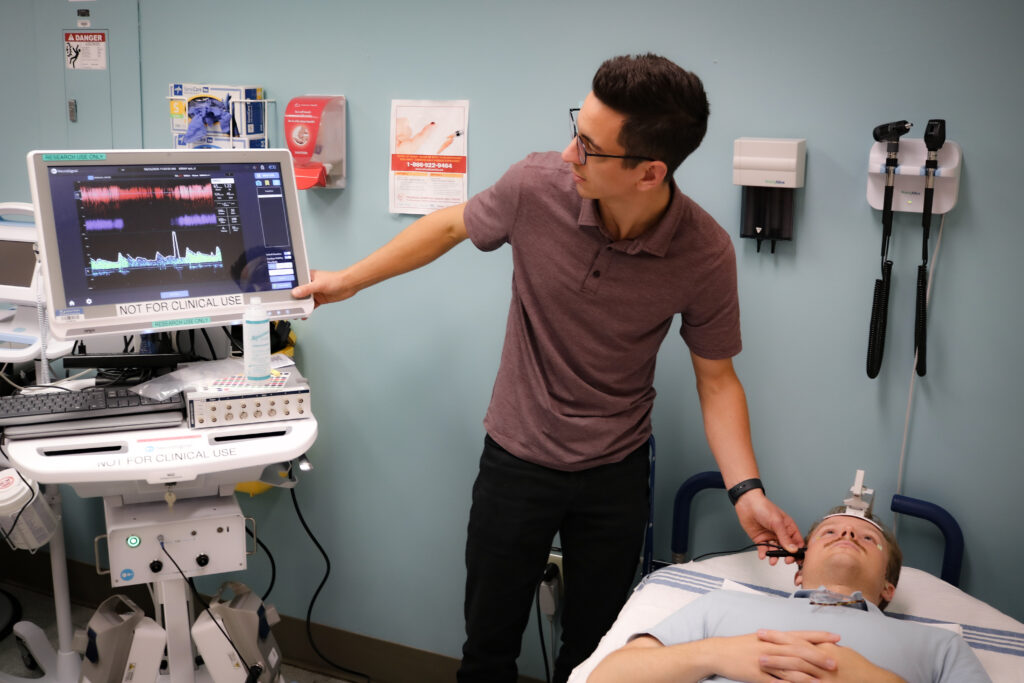
Neurocritical Transcranial Doppler Ultrasound System


The Neurocritical Transcranial Doppler uses AI and robotic technology to assess blood flow in the brain in real time, helping clinicians identify changes that may signal stroke or other neurological conditions. 

This advanced technology can support faster, more informed clinical decisions while reducing reliance on radiation-based imaging. Its automated capabilities also make specialized testing more consistent and accessible, improving stroke, neurocritical and cerebrovascular care at KGH.  

Advancing Parkinson’s Care

Parkinson’s disease is complex and progressive, affecting thousands of individuals and families across the Southern Interior of BC. With cases expected to rise significantly over the next decade, the need for coordinated, innovative and accessible care continues to grow.  

Meaningful Advancements 

Thanks to your generosity and the ongoing innovation at the Humphreys Family Movement Disorder Clinic, meaningful advancements are improving care for people living with Parkinson’s disease throughout our region.

Growing specialized expertise 

Attracting talented clinicians and leaders strengthens care, collaboration and innovation. Two new hires are helping transform Movement Disorder care across the region. Dr. Monique Walsh joined the Jim Pattison Centre for Health Systems Learning and Innovation, with a focus on strengthening regional connections and improving processes that support comprehensive Movement Disorder care. Dr. Talyta Cortez Grippe, Movement Disorder Specialist, joined the Humphreys Family Movement Disorder Clinic to expand specialized care and lead research in neurophysiology for Movement Disorders. 

Creating outreach initiatives 

Deep brain stimulation (DBS) can be life-changing for people living with advanced Parkinson’s disease, helping improve symptoms and quality of life. 

Until recently, patients had to travel to Vancouver for all specialized DBS follow-up care. With donor support and a growing partnership with Vancouver Coastal Health, that care is now available at KGH for more than 100 DBS patients living across the Interior Health region. Twice a year, specialized DBS nurses travel to KGH to provide device checks, programming adjustments and battery assessments, making this important follow-up care much more accessible for patients in the Interior. 

Improving access to care 

A new Fiberoptic Endoscopic Evaluation of Voice and Swallowing (FEEVS) machine is improving access to specialized assessments for people living with Parkinson’s. The technology provides real-time, detailed images of the throat and vocal folds, allowing the Clinic’s Speech-Language Pathologist to assess swallowing safety and vocal function with greater precision. 

Previously, patients faced a six- to eight-month wait for similar testing through KGH’s Outpatient Swallow Clinic. With FEEVS now available at the Humphreys Family Movement Disorder Clinic, assessments can be completed much sooner, reducing wait times and improving access to care. 

0 +

British Columbians live with Parkinson’s disease

$ 0

matching commitment from the Humphreys family

0

cases seen at the Humphreys Family Movement Disorder Clinic in 2025

Innovation Spotlight
A first for Movement Disorder care at KGH

On August 25, 2026, Dr. Talyta Grippe led the first Movement Disorder neurophysiological assessment in clinical practice in B.C. KGH is now one of only three centres in Canada offering this advanced assessment clinically, and the only one where it is embedded within a site-based neurophysiology lab, connecting advanced diagnostics directly with patient care. 

Using non-invasive recordings of muscle and brain activity, neurophysiological studies can help clarify a patient’s diagnosis, directly inform treatment decisions and even help predict whether a patient’s tremor may respond well to surgical intervention. 

For Dr. Grippe, the goal is to bring greater precision to Movement Disorder care and make innovative diagnostic and treatment approaches more accessible to patients in our region. 

Read more here!

COMMUNITY MINDED
Brain Health Related Funds

Payton & Dillon Budd Brain Health Medical Fund

Local philanthropist, Tom Budd, established a $1 million legacy gift in honour of his sons, Payton and Dillon Budd. This endowment will provide awards and grants enabling neurologists to engage in projects and studies that aim to provide a greater understanding of how the brain works to advance the prevention, diagnosis, treatment, and cure of disorders of the brain.

Humphreys Family Support of Parkinson’s Care

Inspired by Barry Humphreys’ Parkinson’s diagnosis, his family made a generous $1 million commitment to advance regional Parkinson’s care. Their gift will grow the capacity of KGH’s Movement Disorder Clinic, aiding in specialist recruitment and funding projects that advance Parkinson’s care, integrating comprehensive team-based supports across the region.

BRAIN HEALTH

Latest Stories

Excellence in health care is closer to home, thanks to you.

Giving Changes Everything.

THE FUTURE OF HEALTH CARE: $40 MILLION
Scroll to Top